Advantages of study marketing

Creativity

Creativity will not only be useful to develop guidelines or help you sell a product or service, but also to solve problems and generate ideas out of the ordinary. That you think «outside the box» in order to see things differently and propose different and innovative solutions.

To sell

You will have to know how to sell an idea, Marketing being a career focused on knowing the market and knowing how to transmit the advantages of what you sell, will help you.

Understand human behavior

Marketing teaches you to identify patterns and the reasons behind those patterns. For companies it’s very important to know the needs and discover how to satisfy them.

Contact with different cultures

You will meet many companies that do things differently than those of your country and have managed to be a success, so you can build on them and in the not so successful cases to know what is not to be done. It will also help you to have a broader catalog of successful companies and people, be able to work with different cultures and have a broader vision of how mkt works in big companies.


Mkt oppose to the stereotype

Today I want to talk about all these new trends that are giving to us a new sight of our reality.

Nowadays, it is no easy for a brand to expose some topic without being critiziced from some groups that could feel atacked. We all recognize the difficulty in achieving this challenge of: be politicaly correct. But… what is exactly to be politicaly correct?

It is hard because there are not a middle point, there will allways be a part that going to feel bad. Maybe we have to think about the fact ,that the biggest problem is that we all want to normalize what we have been taught despite everything around us change.

Let me know what do you think about this.

ALEN for men

If there is something that characterizes the television cleaning ads is the woman who is cleaning the house or played someone who is doing the household chores.

The brand ALEN wants to change this estereotype in Mexico promoved Cloralex, Pinol and Ensueño for men whit the hashtag #Doyourpart and in the commercial you can listen the phrase «Cleaning is everyone’s responsibility.»

This commercial was publicated in tv but in social media the video reached almost 600,000 reproductions y has been shared more than 18,000 times in Facebook.

It was a funny and satirical way to show to audience that it’s time to change one of ours most ingrained estereotype in Mexico and do our part in house for equal.

In conclusion ALEN show and say it in the commercial that the products for woman and men are the same and it was its way to commemorate the Woman’s Day .

Talking about brands? Get ready!

Step by step

Whenever you’re having a conversation about marketing, it’s common to hear people talk about a company’s “brand.”

Your company’s name, how recognizable the name is and how people view it are all part of your brand. You want customers to think and feel something specific when they hear your company’s name.

So lets learn some concepts you will need to know:

  • Brand Identity —This is the message a brand wants to send to its customer. Perhaps you want your company to be seen as professional and exclusive. Or maybe you want it to be young and vibrant. Adjectives like these help to make a brand identity.

Example: Their new logo is fresh and hip, giving them an almost entirely different brand identity.

  • Brand Guidelines —This is a document that explains a brand’s identity entirely. This is usually used by marketing professionals and graphic designers. It is basically a set of do’s (things you should do) and don’ts (things you shouldn’t do) for presenting the brand in any marketing material. It will include things like:
  1. Colors to use
  2. Where and how to use the logo
  3. Acceptable fonts
  4. Types of images
  5. Thickness of borders
  6. Packaging guidelines
  • Look and Feel — This is a way of talking about things in the brand guidelines. The “look and feel” is exactly what it sounds like. It is how the brand looks and how it makes people feel.
  • Visibility — The word visibility refers to something’s ability to be seen. Something that has good visibility is something that can be seen easily. When talking about a brand’s visibility it means the same thing. Look and Feel — This is a way of talking about things in the brand guidelines. The “look and feel” is exactly what it sounds like. It is how the brand looks and how it makes people feel.
  • The more people see or hear about your brand, the more visibility it has.

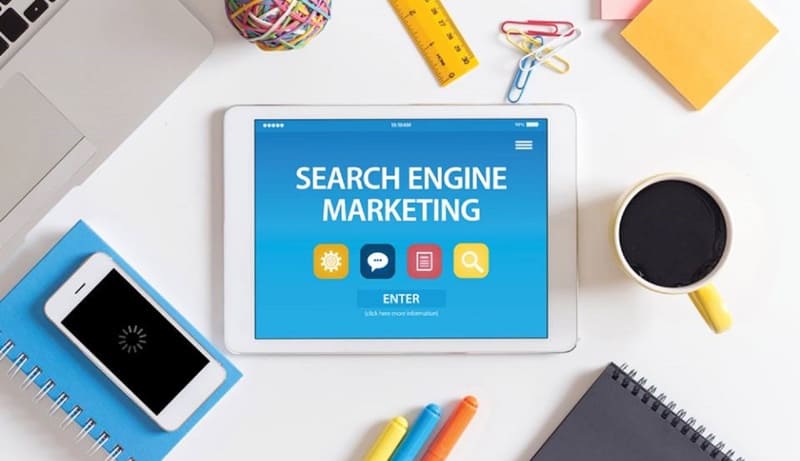
Search Engine Marketing (SEM)

What is it and how to do it right?

Search Engine Marketing is the most common digital marketing strategy used to increase the visibility of a website in search engine results pages.

In SEM advertisers only pay for impressions that result in visitors, making it an efficient way for invest in marketing. Also this is the best way to reach consumers at the right moment because they are open to new information.

How SEM works?

In paid search advertising, sponsored ads appear at the top of and on the side of search engine results pages to gain more visibility.

These ads appear in prominent locations on the page along with the other search listings that match your keywords. The paid listings are highly relevant to their specific search, making it likely that they will click on them.

Important aspects about SEM

When you setting up a campaign whitin an SEM network it is important to take into account the following aspects:

  • Select a set of keywords related to their website or product: Consumers can find your website in a more efficent way whit the correct keywords.
  • Select a geographic location for the ad to be displayed within: If you select a specific geographic location your visibility range will be appropriate to increase the efficiency of the advertisement.
  • Create a text based ad to display in the search results.
  • Bid on a price they are willing to pay for each click on their ad: the company will be support the price for the total clicks that the campaign to require.

Keywords-New Product Development

Keywords

  1. Retailer:
    • It is the trading company or person that sells products directly to the consumers.
  2.  Product launch:
    • Activities to inform the consumer of the existence of a new product on the market.
  3.  Label:
    • Small piece of paper, metal etc. on a product giving information about it.
  4.  Sponsor:
    • Firm supporting an organization in return for advertising space.
  5.  Trade mark:
    • Special symbol, desing word, used to represent a product or firm.
  6.  Boocket:
    • Book with a small number of pages giving information about all the products and services.
  7.  Product range:
    • All the types of products that a company stares and sells.
  8.  Trend:
    • Refers to a pattern of gradual change in process, out put, sales over a considerable period of time.
  9.  Survey:
    • Research tool to get information from various people, using a predesigned questionnaire.
  10.  Examining:
    • Inspect something in detail to determine their nature or condition, investigate thoroughly.
  11.  Evidence:
    • The available body of facts or information indicating whether a belief or proposition is true or valid.
  12.  Research:
    • Study of materials and sources in order to establish facts and reach new conclusions.
  13.  Principles:
    • The ideas that form the widely agreed upon basis of most product promotion strategies. 
  14.  Ethic:
    • A set of moral principles, especially ones relating to or affirming a specified group, field, or form of conduct.
  15.  Business:
    • The practice of making one’s living by engaging in commerce.
  16.  In bound:
    • Returning to the original point of departure.
  17.  Analytics:
    • The systematic computational analysis of data or statistics.
  18.  Proactivity:
    • A measure of the efficiency of a person, machine, factory, system, etc. in converting inputs into useful outputs.
  19.  Rosources:
    • A stock or supply of money, materials, staff, and other assets that can be drawn on by a person or organization in order to function effectively.
  20.  Marketing managers:
    • A person responsible for controlling or administering all or part of a company.
  21.  Copy:
    • Refers to the text in books, magazines, and newspapers.
  22.  Print Ads:
    • Print media such as magazines and newspapers, to reach consumers, business customers and prospects
  23.  Advertising:
    • Describe or draw attention to a product, service, or event in a public medium in order to promote sales or attendance.
  24.  Consumer:
    • A person who purchases goods and services for personal use.
  25.  Credibility:
    • The quality of being trusted and believed in.
  26.  Rivals:
    • A persone or company competing with another for the same objective or for superiority in the same field of activity.
  27.  Packaging:
    • Materials used to wrap or protect goods.
  28.  Benchmarking:
    • Evaluate or check something by comparison with a standard.
  29.  Insight:
    • Elemento intangible que nace del pensamiento del consumidor
  30.  Development:
    • The process of developing or being developed.

Why are they important?

They are important because there are useful for every situation for marketing or business, and for this case on the delopment of a new product.

They could help to measure risks, opportunities and other factors that will be critical for the survival of the new product.